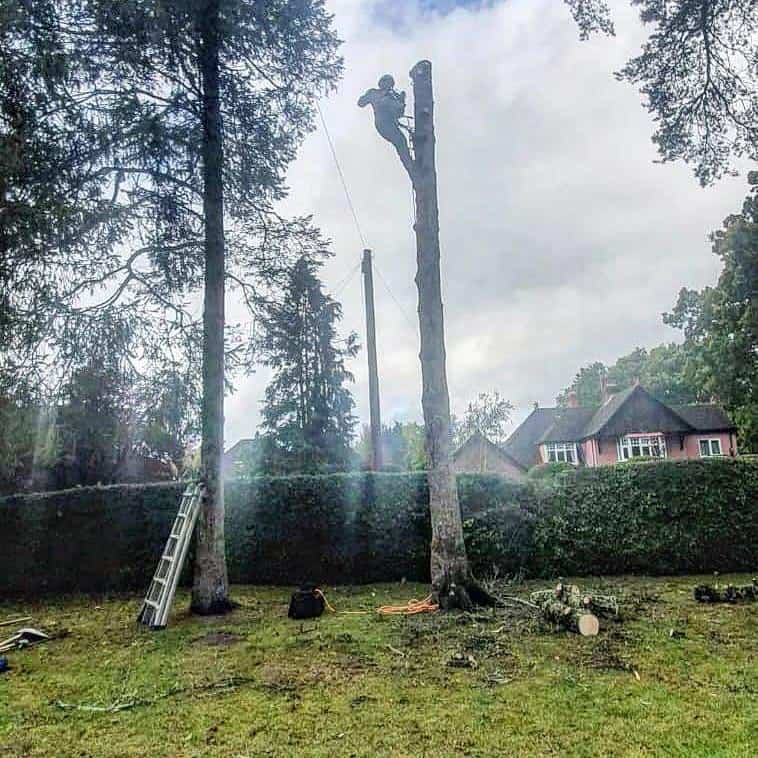
Trees are a valuable part of many gardens, providing shade, privacy, wildlife habitat, and visual appeal. In most situations, professional tree care services such as pruning, crown reduction, or reshaping can help maintain a tree’s health and safety. However, there are times when tree removal becomes the most practical and responsible option.
For homeowners in Sawston, Cambridge, understanding when tree removal is necessary can help protect both the property and the surrounding landscape. While removing a tree is never a decision that should be taken lightly, there are circumstances where it offers the safest and most beneficial solution.
At Sawston Tree Surgeons, we always aim to preserve healthy trees wherever possible, but when removal is the best option, our experienced team can carry out the work safely and professionally.
1. The Tree Is Dead
A dead tree can quickly become hazardous
Once a tree has died, it begins to lose structural strength over time.
Common concerns include:
- Falling branches
- Increased instability
- Progressive decay
- Greater vulnerability to storms
Removing a dead tree helps eliminate potential risks before they affect people or property.
2. Severe Storm Damage Has Occurred
Some trees cannot recover safely
High winds and severe weather can cause significant structural damage.
This may include:
- Split trunks
- Major limb failures
- Uprooting
- Severe canopy damage
In some cases, the extent of the damage makes safe recovery impossible, making removal the most sensible solution.
3. The Tree Is Leaning Dangerously
Not all leaning trees are stable
While some trees naturally grow at an angle, a sudden or worsening lean can indicate serious structural problems.
Warning signs include:
- Exposed roots
- Soil movement around the base
- Cracks in the trunk
- Changes following storms
Professional assessment is essential to determine whether removal is necessary.
4. Disease Has Caused Extensive Decline
Severe disease can affect stability and health
Certain diseases can weaken a tree to the point where recovery becomes unlikely.
Signs may include:
- Large areas of dead growth
- Significant canopy loss
- Fungal growth
- Extensive decay
When disease has progressed beyond treatment, removal may be the safest option.
5. The Tree Is Damaging Structures
Roots and branches can create problems
As trees mature, they may begin affecting nearby structures.
Common issues include:
- Branches contacting roofs
- Interference with buildings
- Damage to walls or hard surfaces
- Ongoing structural concerns
In situations where management techniques are no longer effective, removal may provide the best long-term solution.
6. The Tree Has Outgrown Its Location
Space limitations can create challenges
Trees that were once suitable for a garden may eventually become too large for their surroundings.
Problems can include:
- Excessive shading
- Overcrowding
- Restricted garden use
- Conflicts with neighbouring vegetation
When a tree can no longer coexist comfortably within its environment, removal may be necessary.
7. Significant Decay Is Present
Internal deterioration often weakens the tree
Decay can compromise the structural integrity of a tree, even when external symptoms appear limited.
Professional inspections may reveal:
- Hollow sections
- Decaying trunks
- Weak branch unions
- Hidden structural defects
Where safety becomes a concern, removal may be recommended.
8. The Tree Is Preventing Development or Landscaping Plans
Some projects require space to move forward
Occasionally, property improvements may be impossible without removing a tree.
Examples include:
- Garden redesigns
- Extension projects
- New outdoor living spaces
- Access improvements
A professional assessment helps determine whether removal is appropriate or if alternative tree management options are available.
9. Repeated Maintenance No Longer Solves the Problem
Ongoing issues may indicate removal is the better option
Some trees require continual intervention due to poor condition, structural defects, or unsuitable positioning.
If a tree repeatedly causes concerns despite professional maintenance, removal may provide:
- Greater long-term safety
- Reduced future disruption
- Improved use of outdoor space
- Better overall landscape management
In certain situations, removal becomes the most practical long-term solution.
Why Professional Assessment Matters
Every tree should be evaluated individually
Removing a tree is a significant decision and should always be based on professional advice.
An experienced tree surgeon can assess:
- Tree health
- Structural condition
- Potential risks
- Available management options
At Sawston Tree Surgeons, we provide professional tree assessments throughout Sawston, Cambridge, helping homeowners make informed decisions about the care and management of their trees.
Tree Removal Should Never Be the First Option
Preservation is often preferable
Many tree-related issues can be resolved through:
- Crown reduction
- Pruning
- Deadwood removal
- Structural management
However, when a tree presents ongoing risks or cannot be maintained safely, removal may be the most responsible course of action.
Conclusion
While healthy trees provide enormous value to a property, there are situations where removal becomes the smartest and safest choice. Dead trees, severe storm damage, disease, structural instability, significant decay, and unsuitable locations can all make removal necessary. The key is ensuring that the decision is based on a professional assessment rather than assumptions.
For homeowners in Sawston, Cambridge, Sawston Tree Surgeons provides expert tree inspections, management, and removal services tailored to each property’s needs. If you are concerned about the condition, safety, or suitability of a tree on your property, our experienced team can provide honest advice and professional solutions to help protect your home and garden.
Call us on: 01223 912 294
Click here to find out more about Sawston Tree Surgeons
Click here to complete our contact form and see how we can help with your tree care needs.